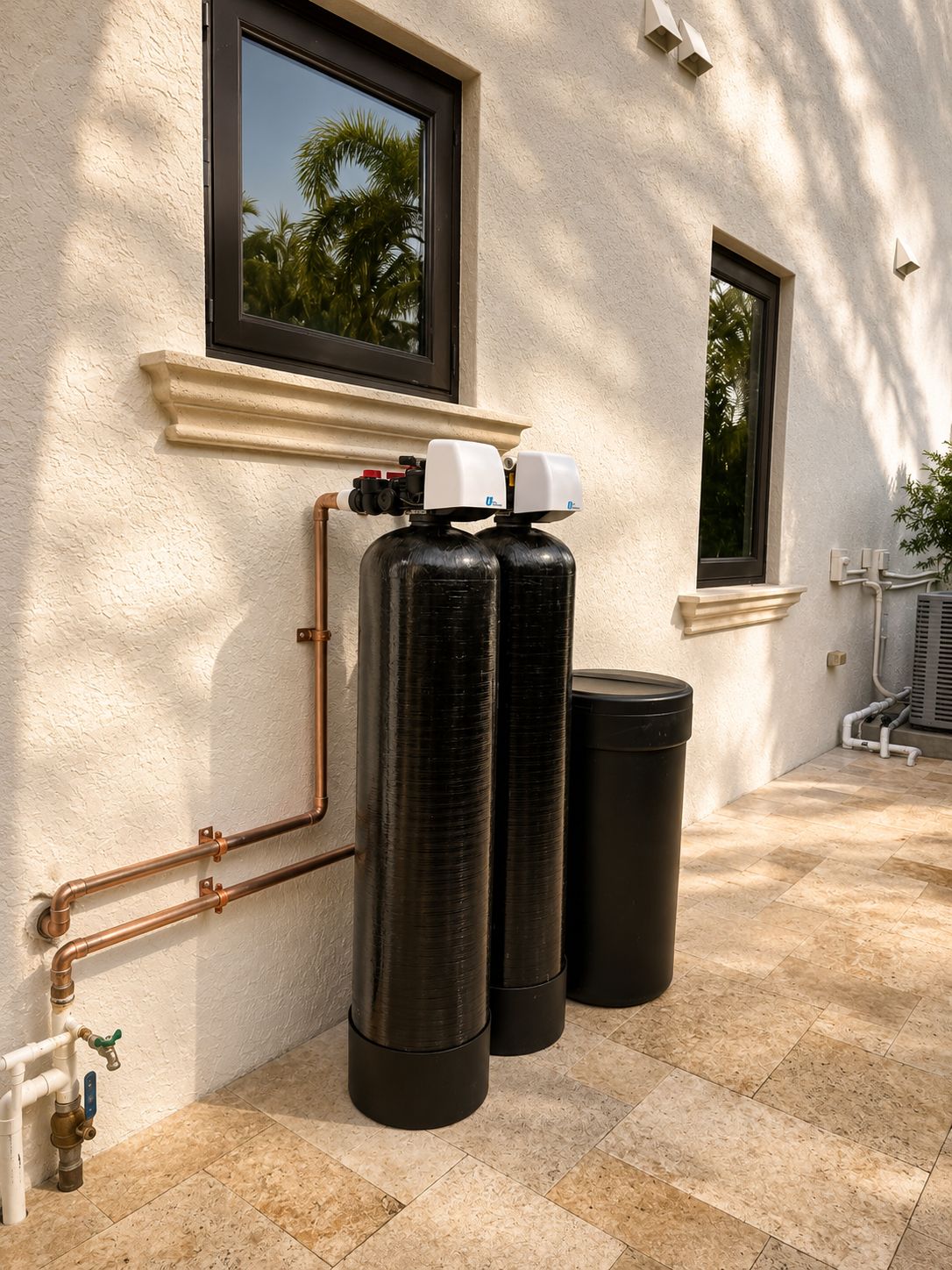
Regular system
Filter + Softener
Two tanks split the work: filtration in one, ion-exchange softening in the other, with a brine tank for salt.

Whole-Home Water Systems · South Florida
Real Flow Water installations, real tank sizes, real finishes and real protection options — so you can understand what will actually end up on your wall before your system is specified.
Choose the architecture
The booklets make the difference clear: the right layout depends on whether you want conventional salt-based softening, a smaller mixed-bed footprint, no salt, or every available protection layer.
Two tanks split the work: filtration in one, ion-exchange softening in the other, with a brine tank for salt.
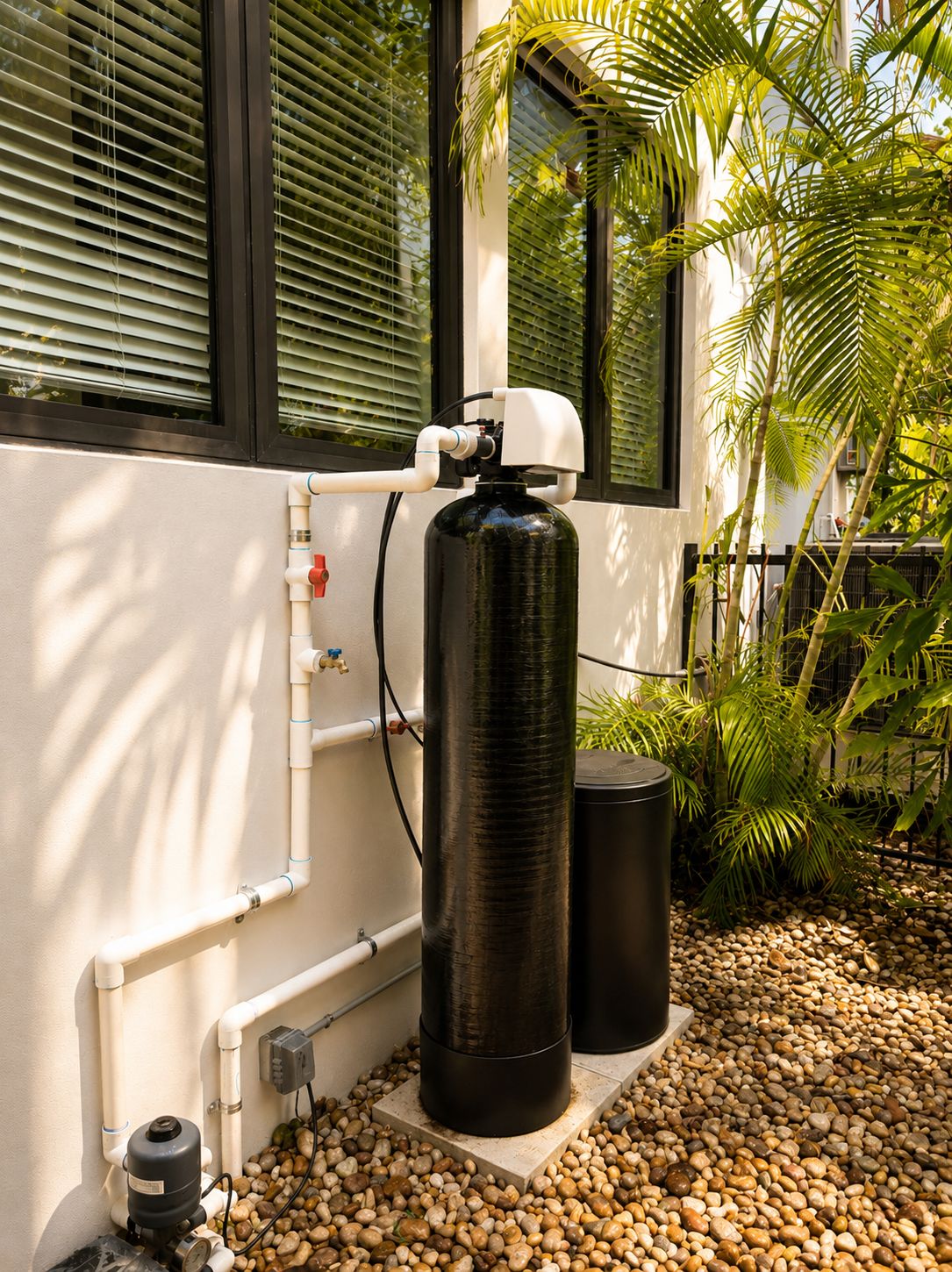
Filtration and softening share one media vessel. Lower equipment footprint, with more frequent media service.
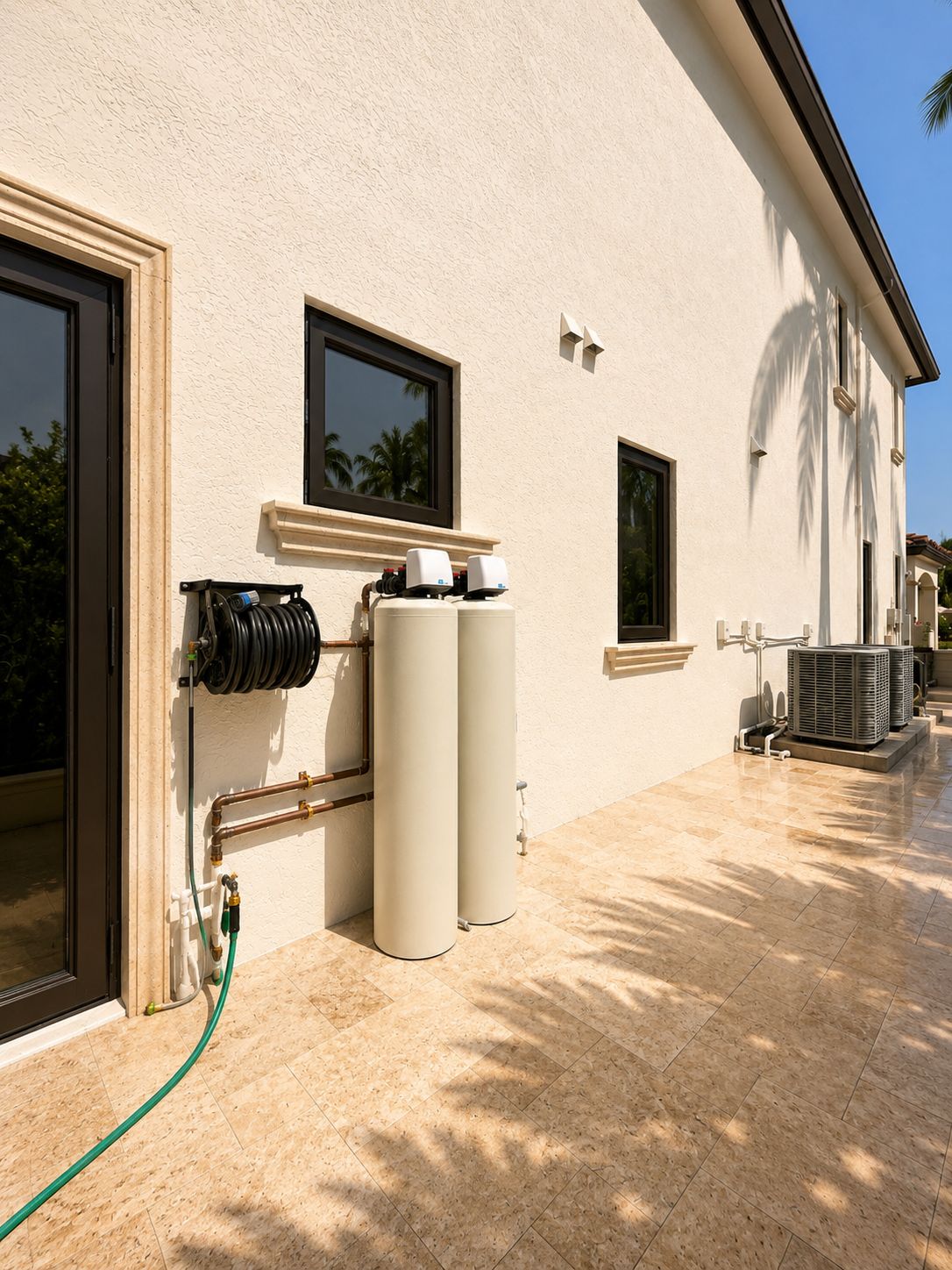
Conditioning helps stop scale from forming without removing hardness minerals the way ion exchange does.
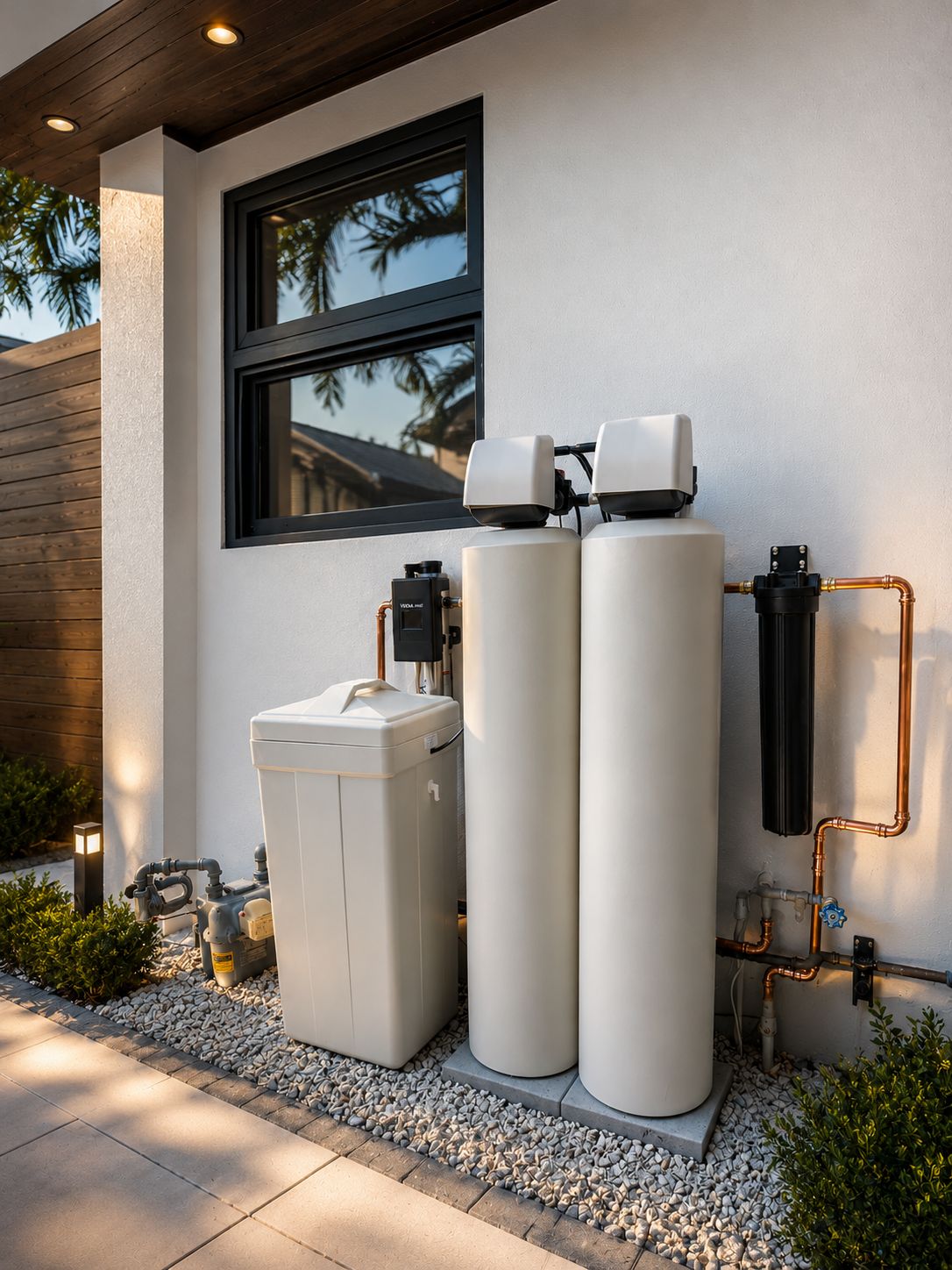
Filter, softener, brine, pre-sediment and UV can be combined when the home and water conditions call for it.
Know what you are buying
A whole-home system is a set of separate pieces, each doing one job. Your build may use some or all of these depending on your water, plumbing and goals.
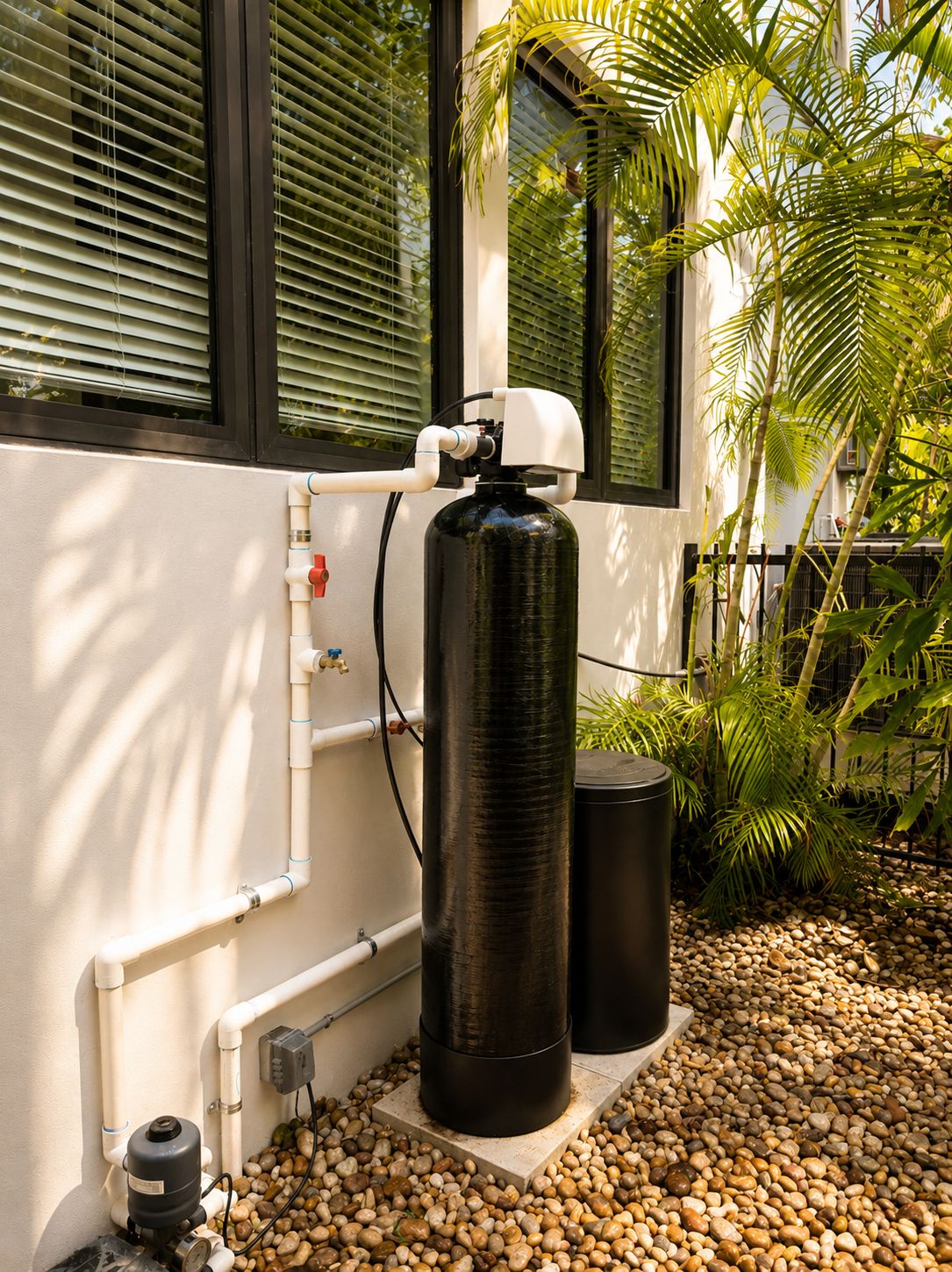
A carbon or blended-media pressure tank on the main line. It treats every drop entering the house — kitchen, showers, laundry and ice maker.
A separate tank of ion-exchange resin when hardness needs to be addressed. This is the piece that targets scale, spotting and soap scum.
The shorter tank that stores salt and recharges softener resin. It is the part a homeowner periodically adds salt to.
Installed ahead of the tanks to catch dirt, rust and sand before they reach the control valve or treatment media.
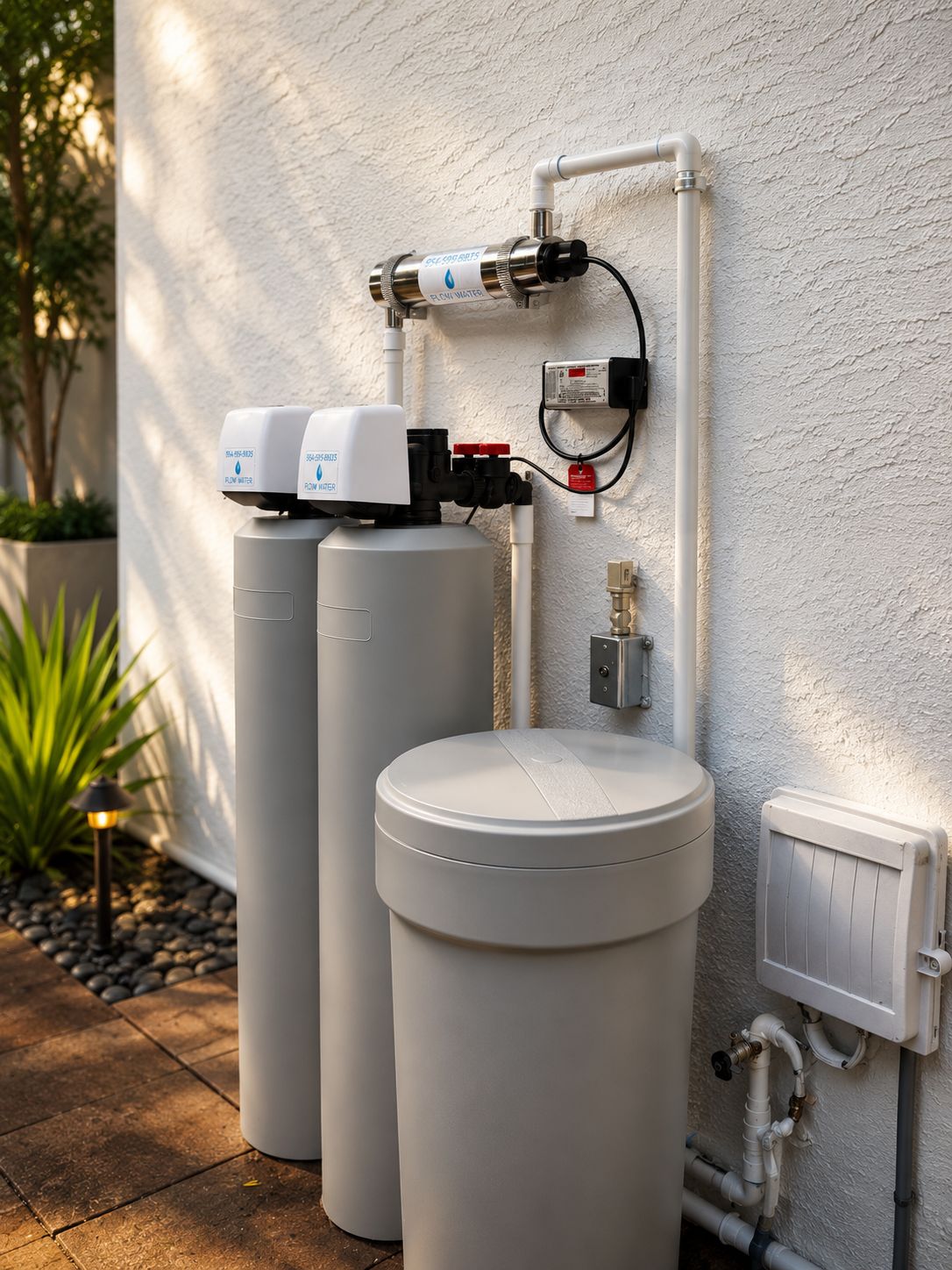
A stainless chamber placed after filtration so water passes the lamp last on its way into the home. Lamp service is model-specific.
Eight real Flow Water installations
Every system below is based directly on the client’s “See Your System” booklet. These are not renders — they are real combinations of tank size, finish, plumbing and optional protection.
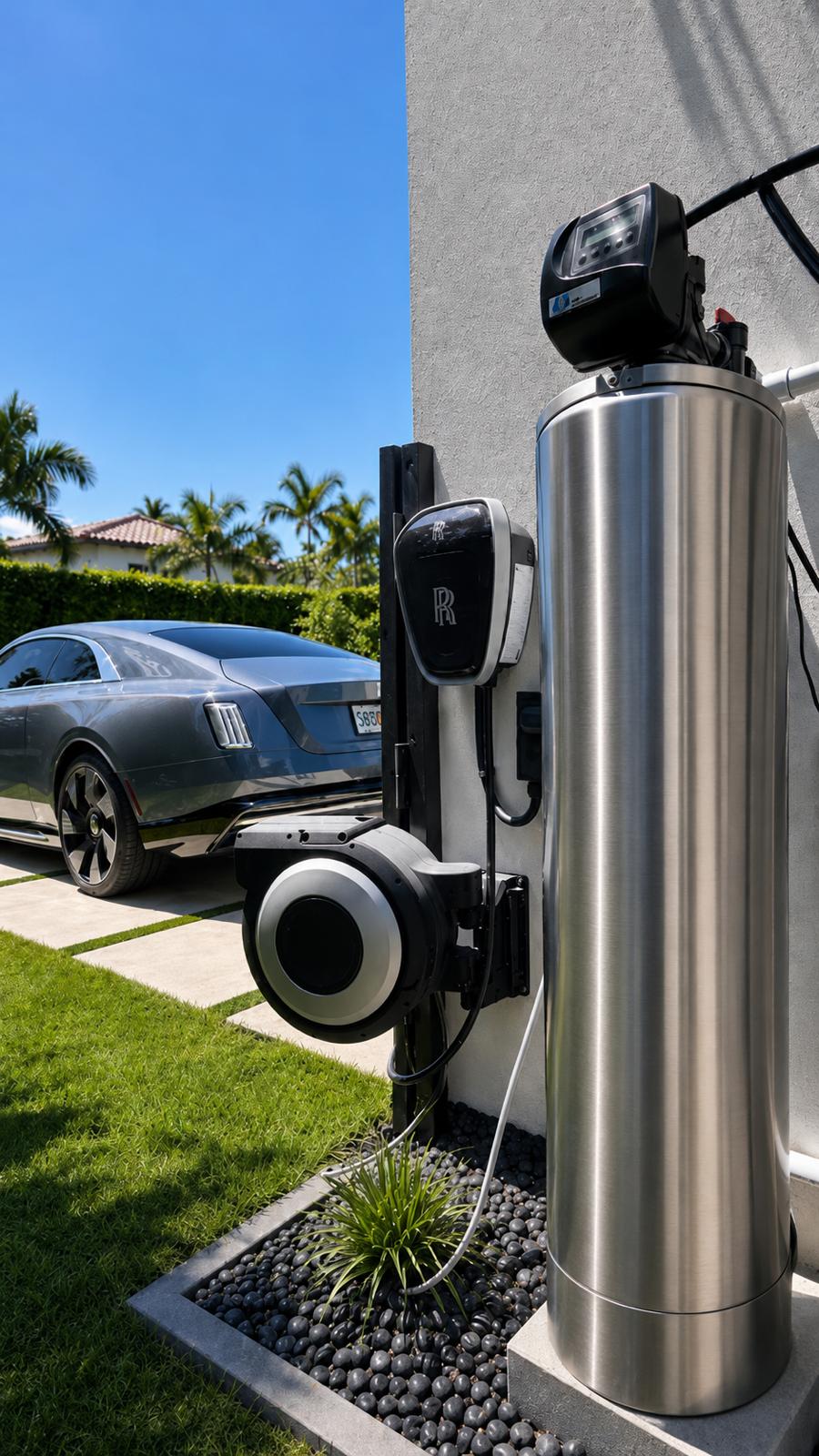 01
Includes: Filter tank · Clack valve · Bypass
A single filtration tank on the main line — no softener and no brine tank. The simplest build when the goal is better-tasting water at every tap rather than hardness control.
02Includes: Filter · Softener · Brine tank
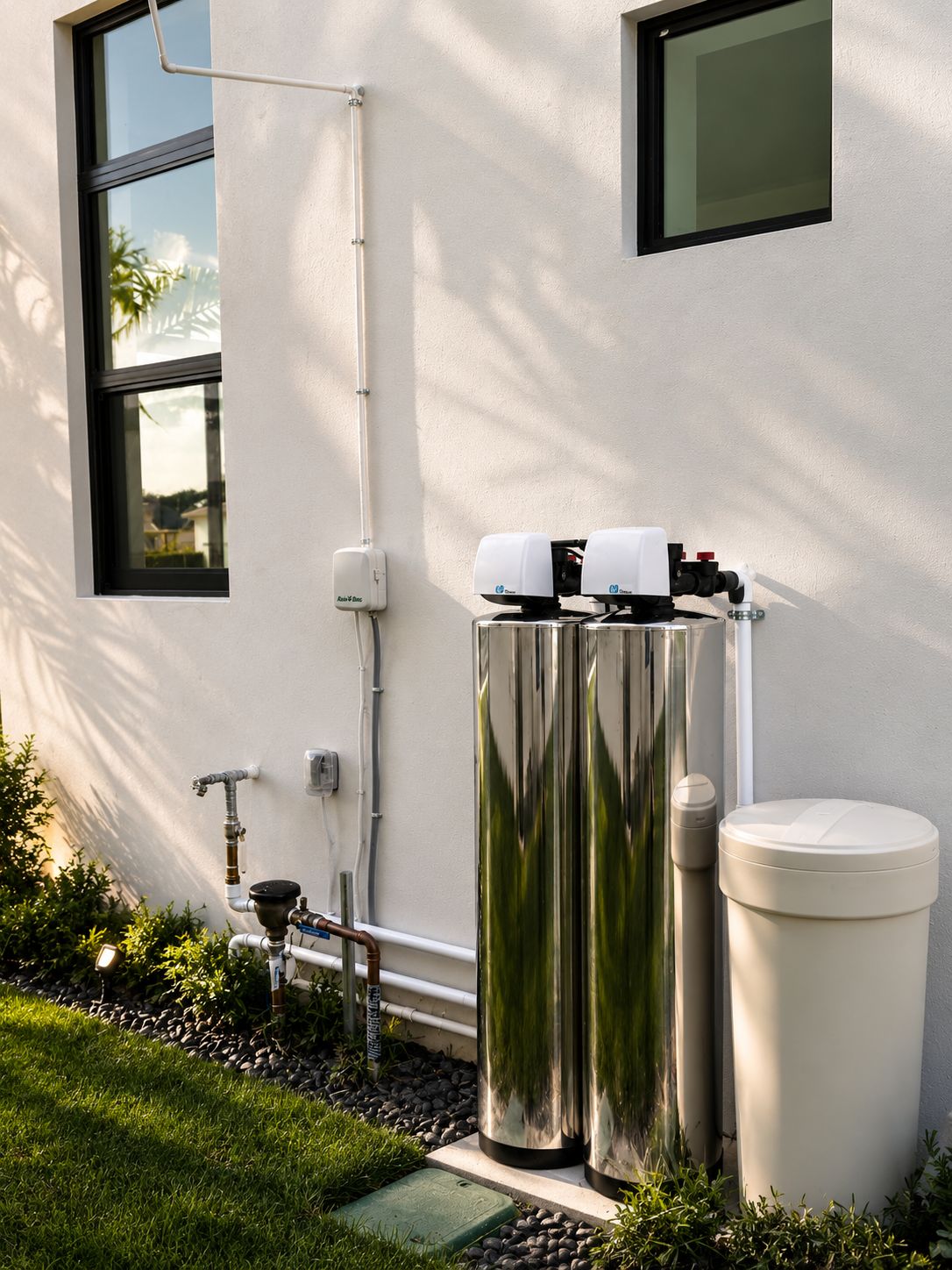
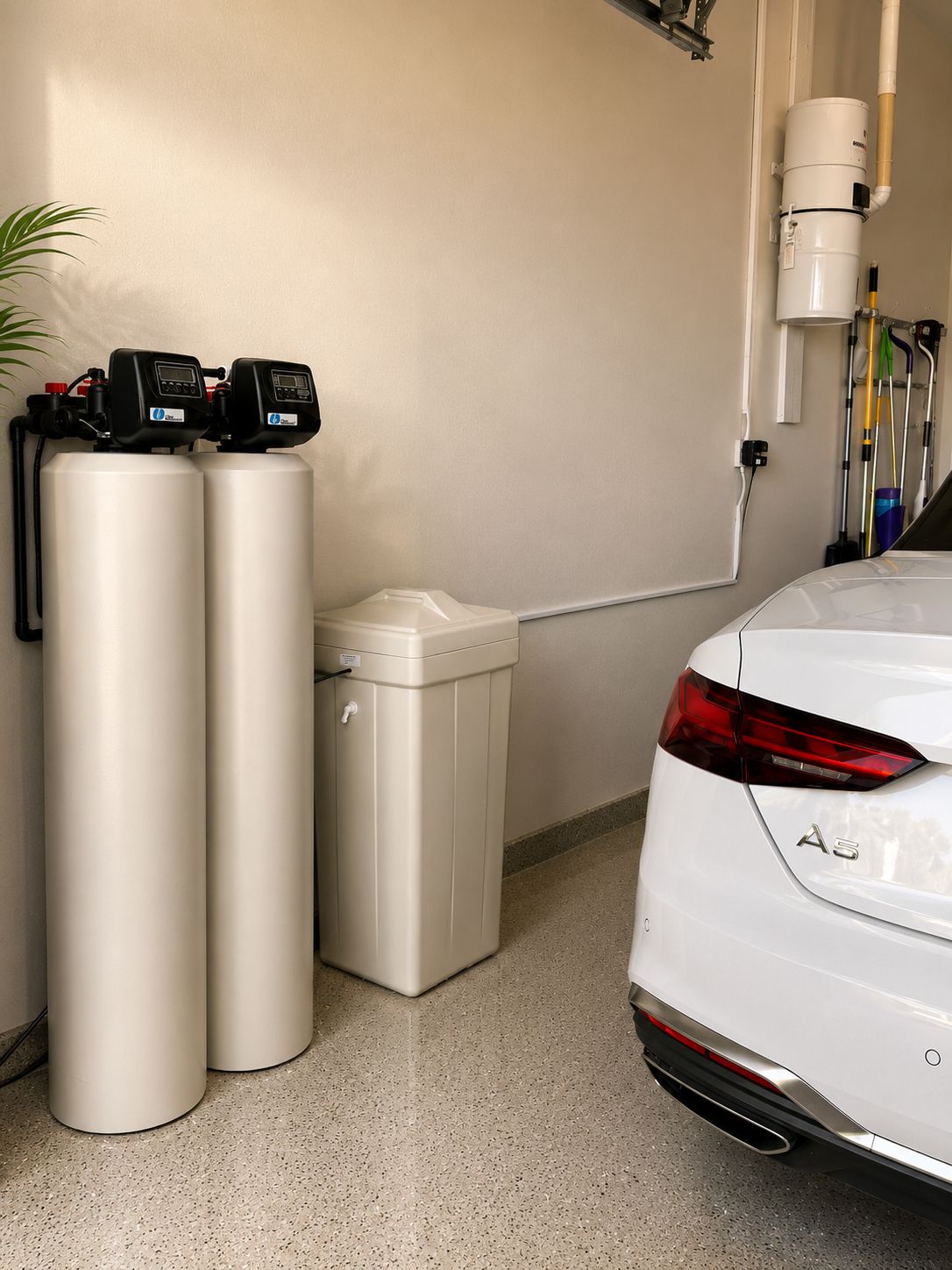
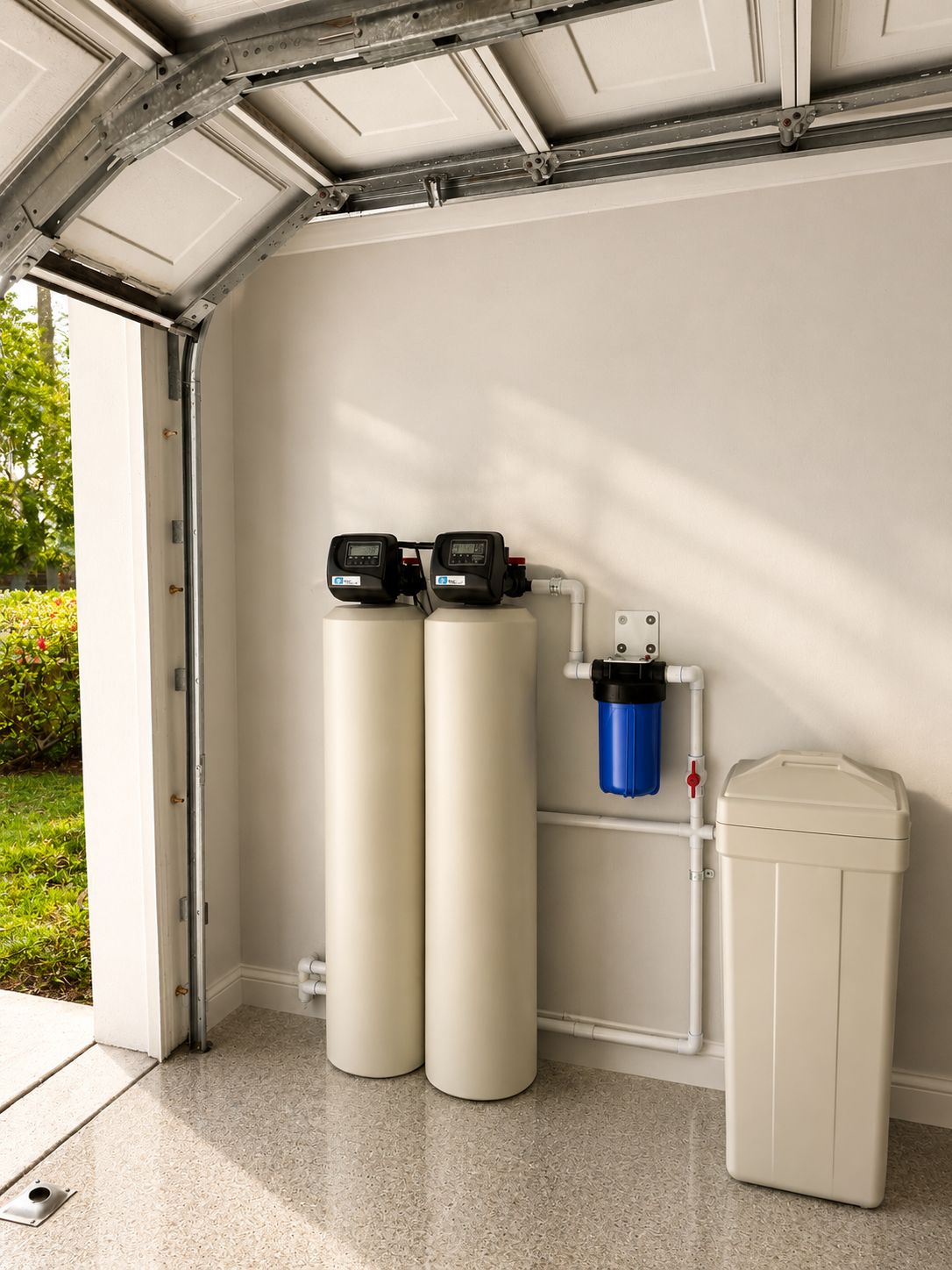
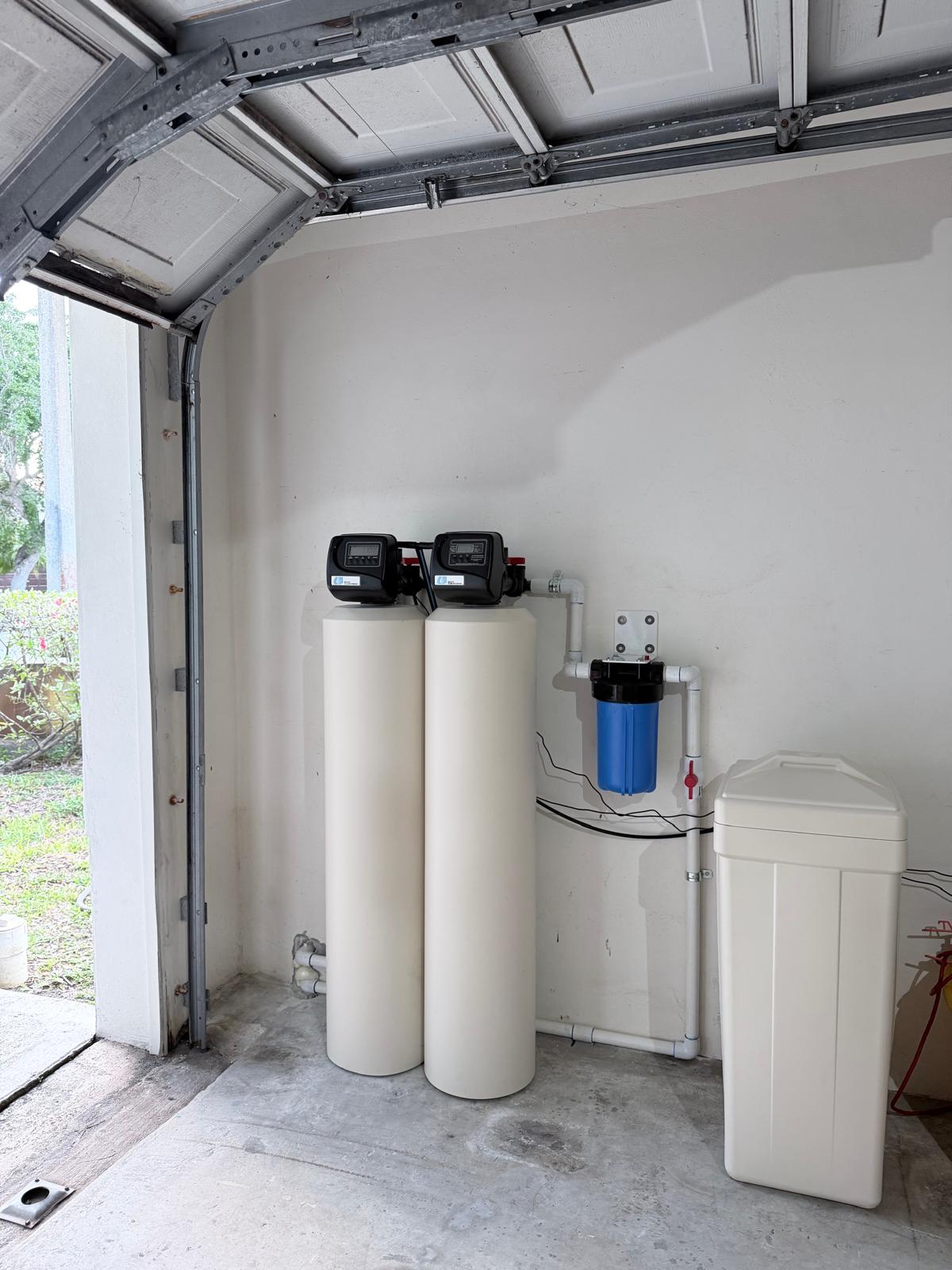
Filtration and softening on two separate tanks, plus a brine tank for salt. It is the standard footprint for many South Florida homes.
03Includes: Filter · Softener · Brine
The same two-tank filter-and-softener architecture, finished in mirror stainless. Finish choices can be specified per component.
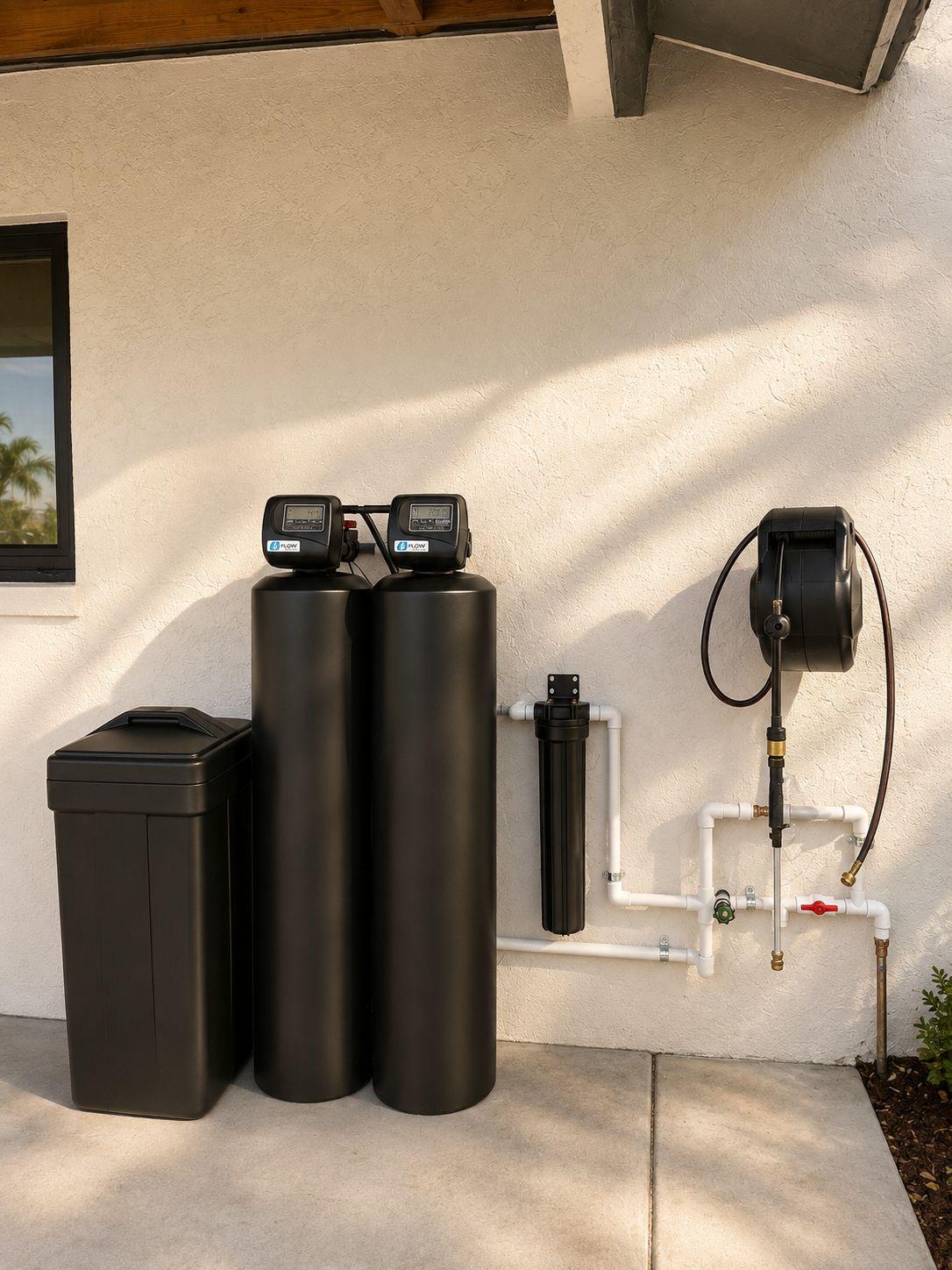 04
Includes: Filter · Softener · Brine · Pre-sediment
Designed for smaller homes or tighter equipment areas. Even at the smallest tank size, optional protection can still fit ahead of the tanks.
05Includes: Mixed-bed tank · Brine tank
The largest tank size shown in the booklet, running a mixed-media bed selected for the property. Built for higher simultaneous demand where one treatment tank must carry the house.
06Includes: Filter · Salt-free conditioner · No brine tank
A no-salt configuration with no salt to carry and no brine tank. Salt-free conditioning works differently from ion-exchange softening, so hardness minerals remain in the water.
07Includes: Filter · Softener · Brine · UV chamber
A two-tank build with a stainless UV chamber mounted after filtration, treating water on its final run into the home.
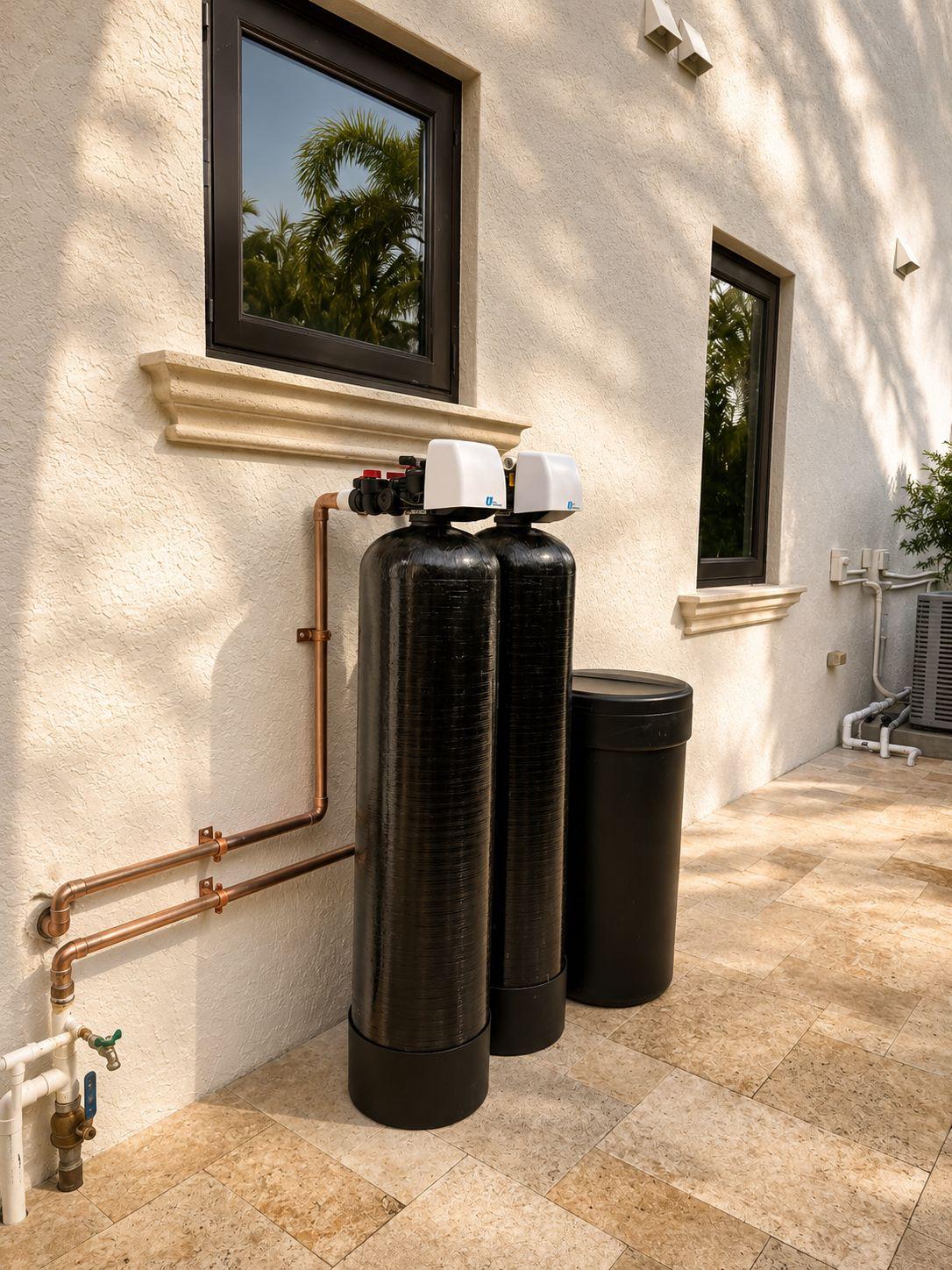
08Includes: Filter · Softener · Brine · Pre-sediment
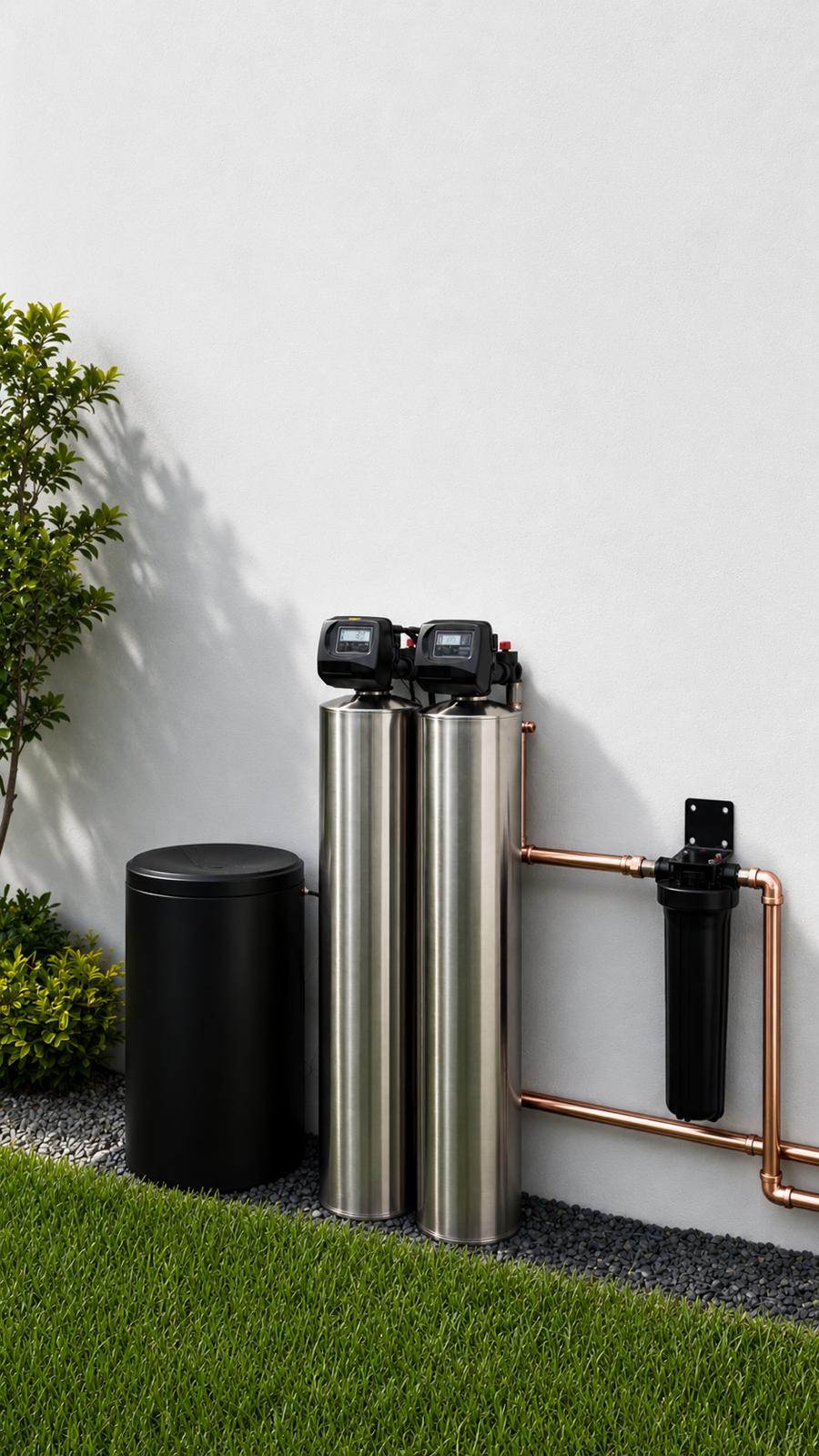
Stainless tanks, copper plumbing and a pre-sediment housing on the inlet — premium visible hardware in a compact footprint.
Inside the tank
A tank is only the vessel. Flow Water’s booklet positions the treatment media as the part that should be selected around the actual water conditions — not one stock blend for everyone.
Used for treated city water where chlorine and chloramine are common taste and odor concerns, over a graded gravel underbed.
A quality activated carbon for improving taste and odor when the water does not call for a more specialized blend.
An alternative carbon specified case by case when the property’s water conditions make it the better choice.
A copper-zinc media layered with carbon when water conditions call for it; not included in every build.
Used when one media will not cover what the water is doing, including properties with well water or non-standard treatment needs.
The ion-exchange resin inside a softener tank that performs the actual softening work.
Everything you choose
Bathroom count is only a starting point. Final sizing also depends on plumbing size, simultaneous fixture demand, media quantity and the water conditions at the property.
Smaller homes and tight equipment areas.
A common mid-size fit for many South Florida homes.
More media and better flow when multiple fixtures run together.
Large homes and high simultaneous water demand.
Tank finish
Finish changes how the system reads visually, not how it performs. Fiberglass is the standard vessel; stainless can be a tank finish or cover depending on the build.
BlackTanGreyStainlessReal Flow Water work
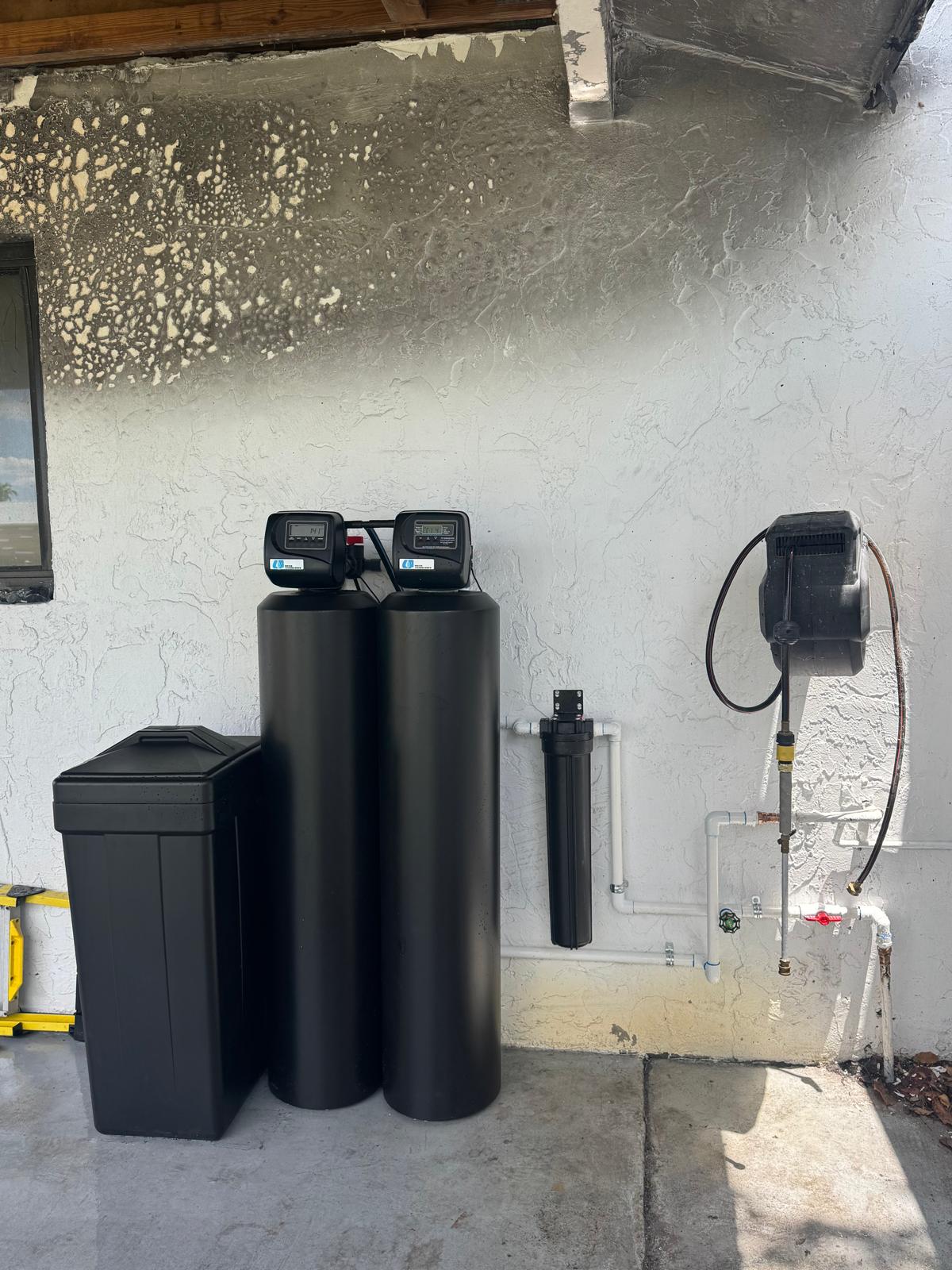
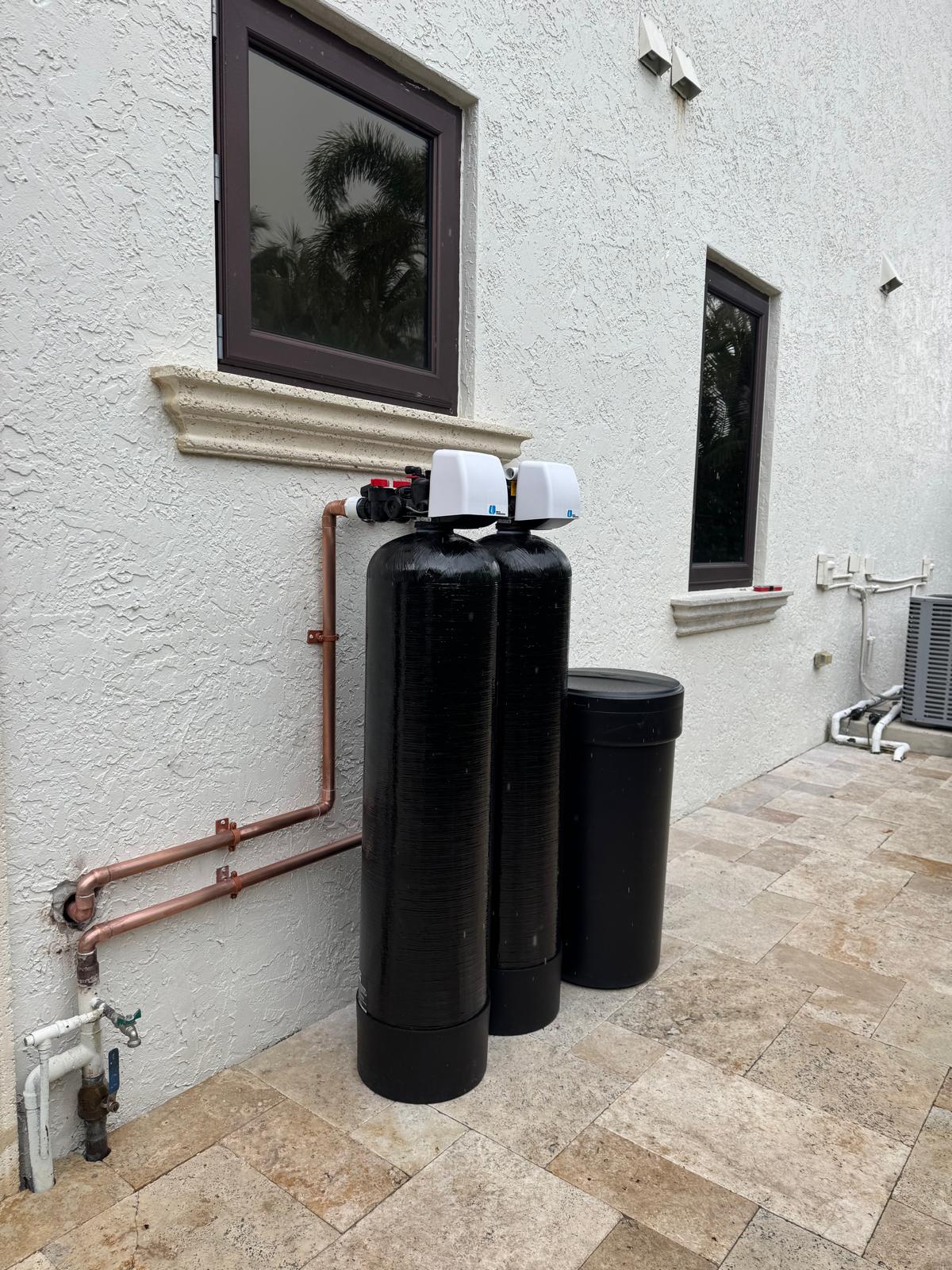
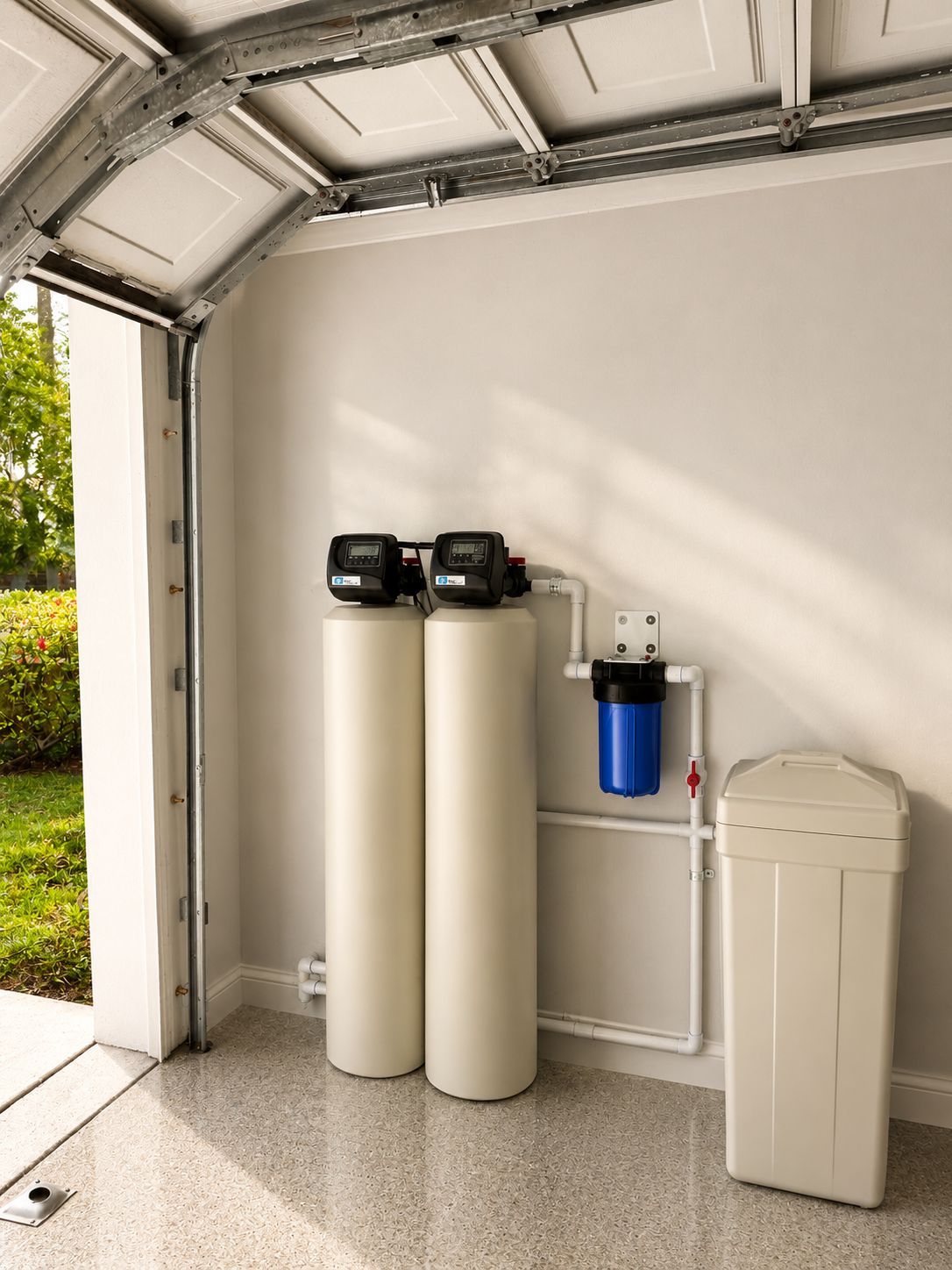
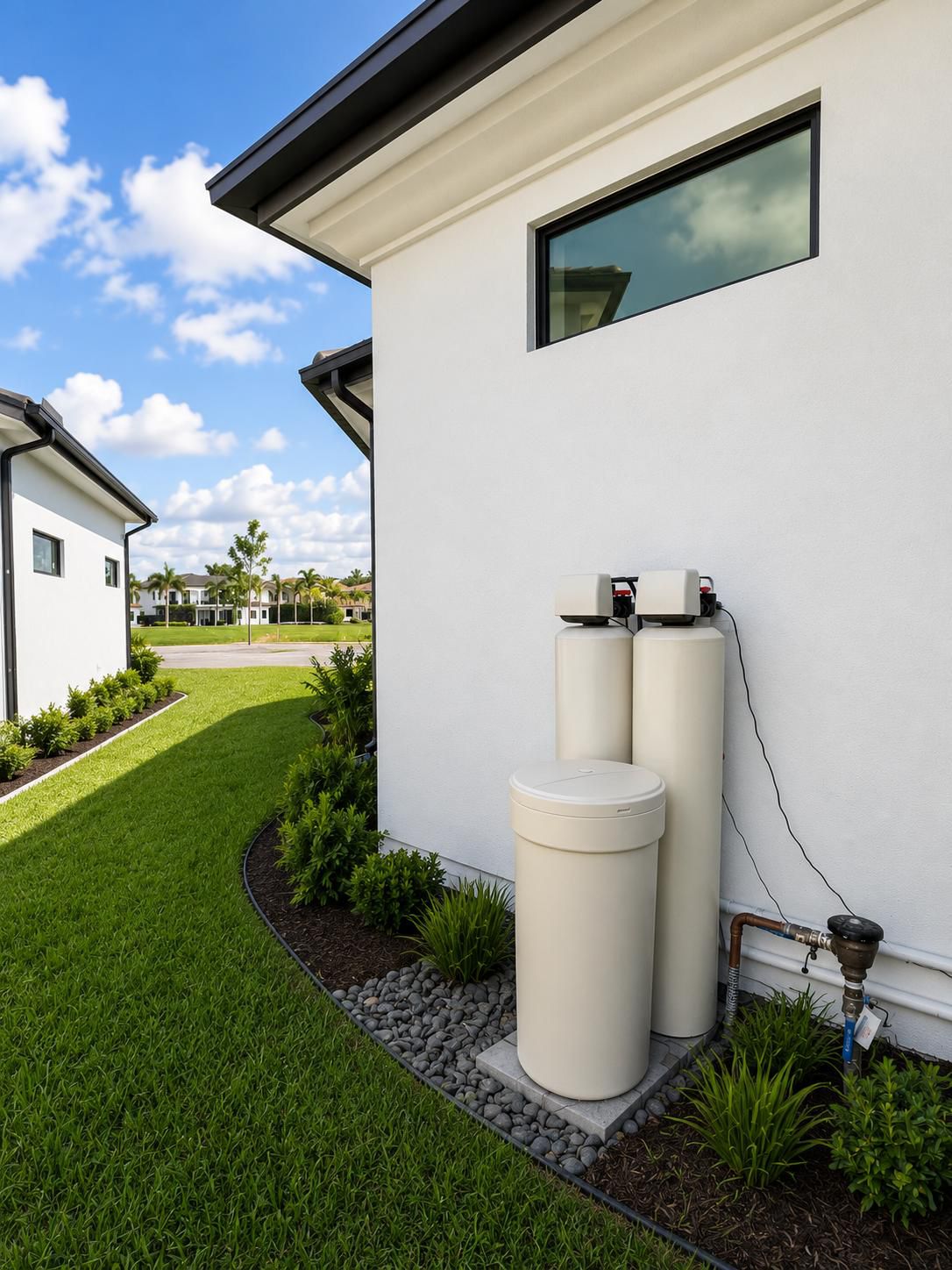
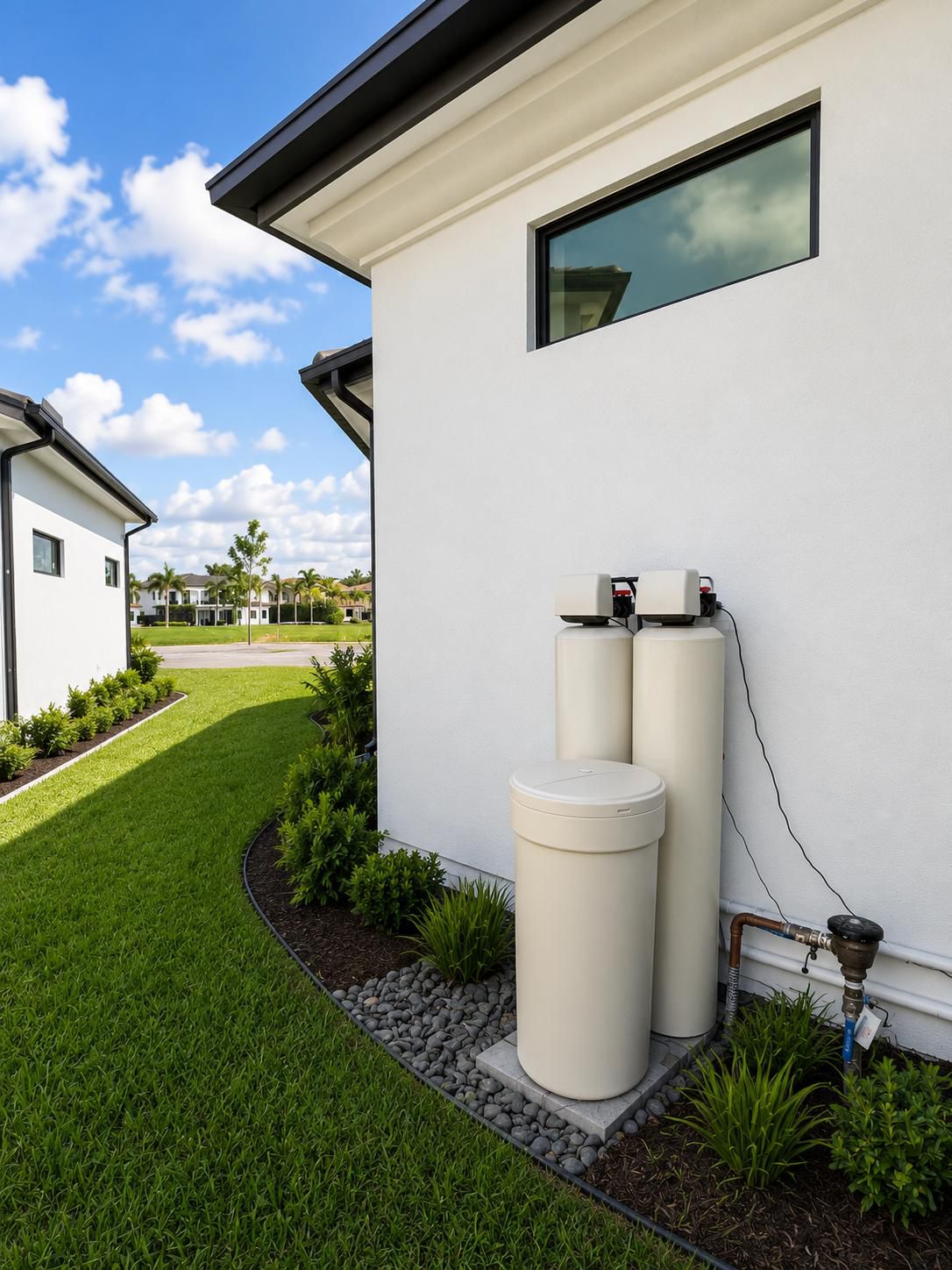
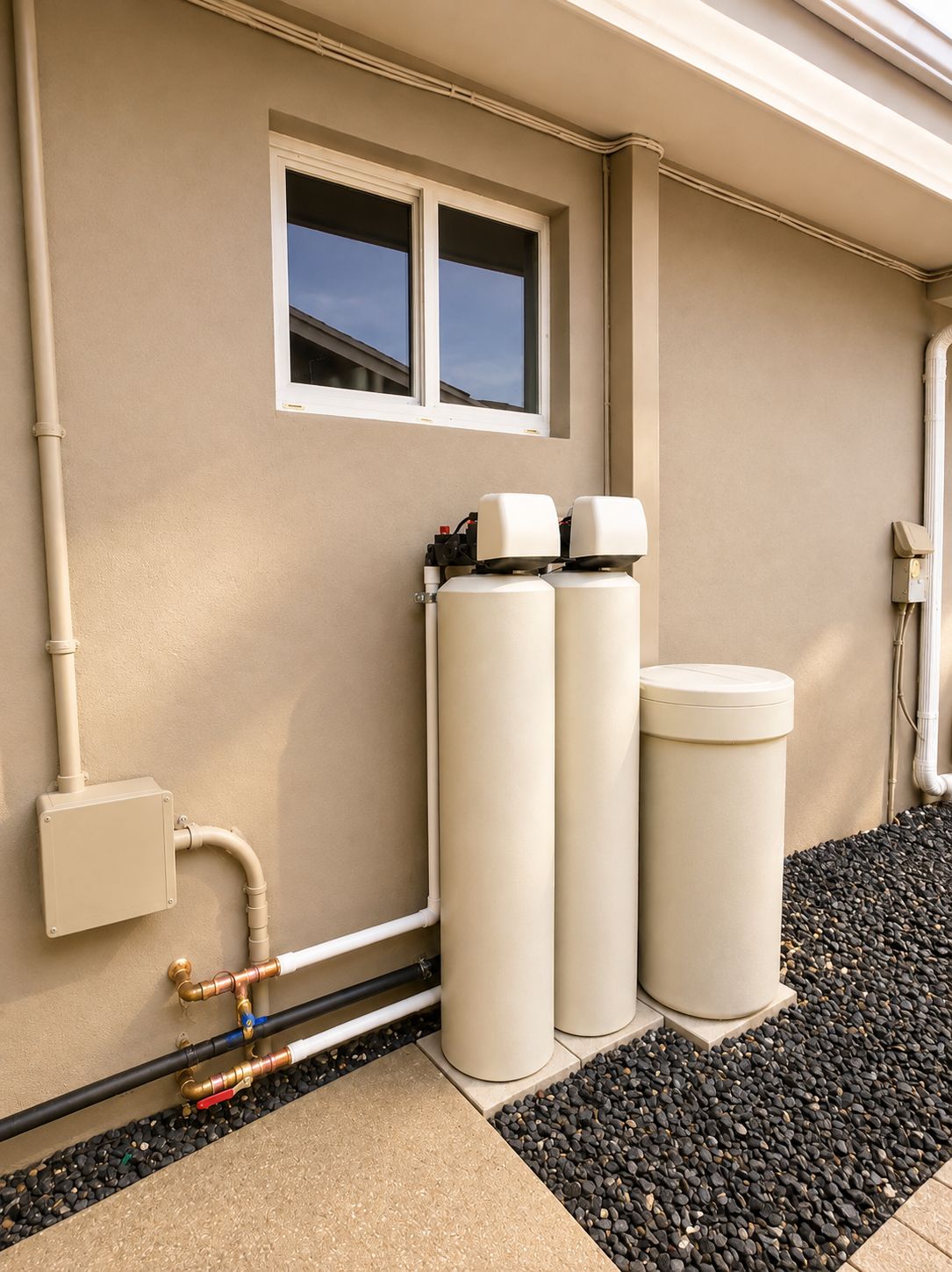
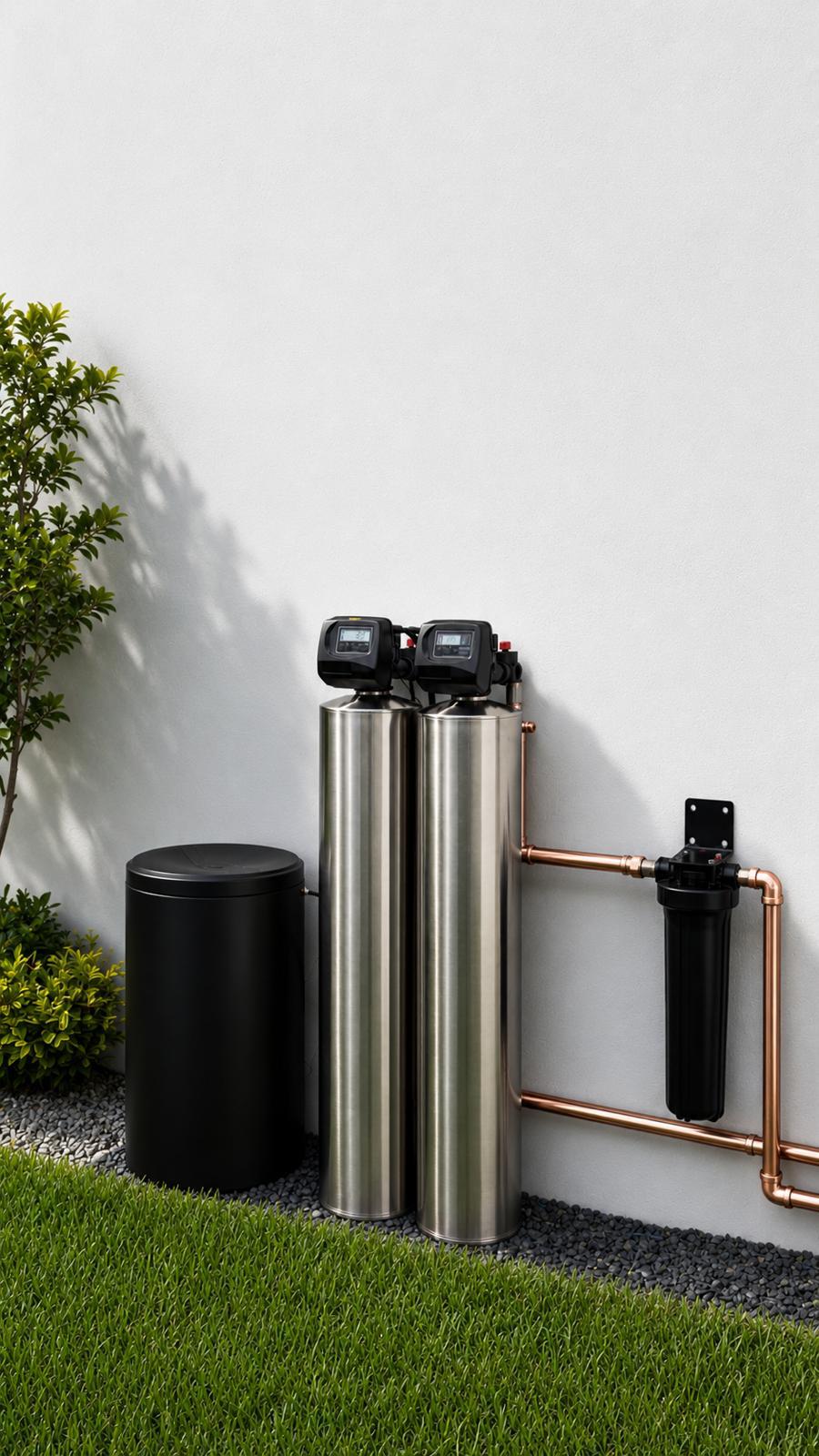
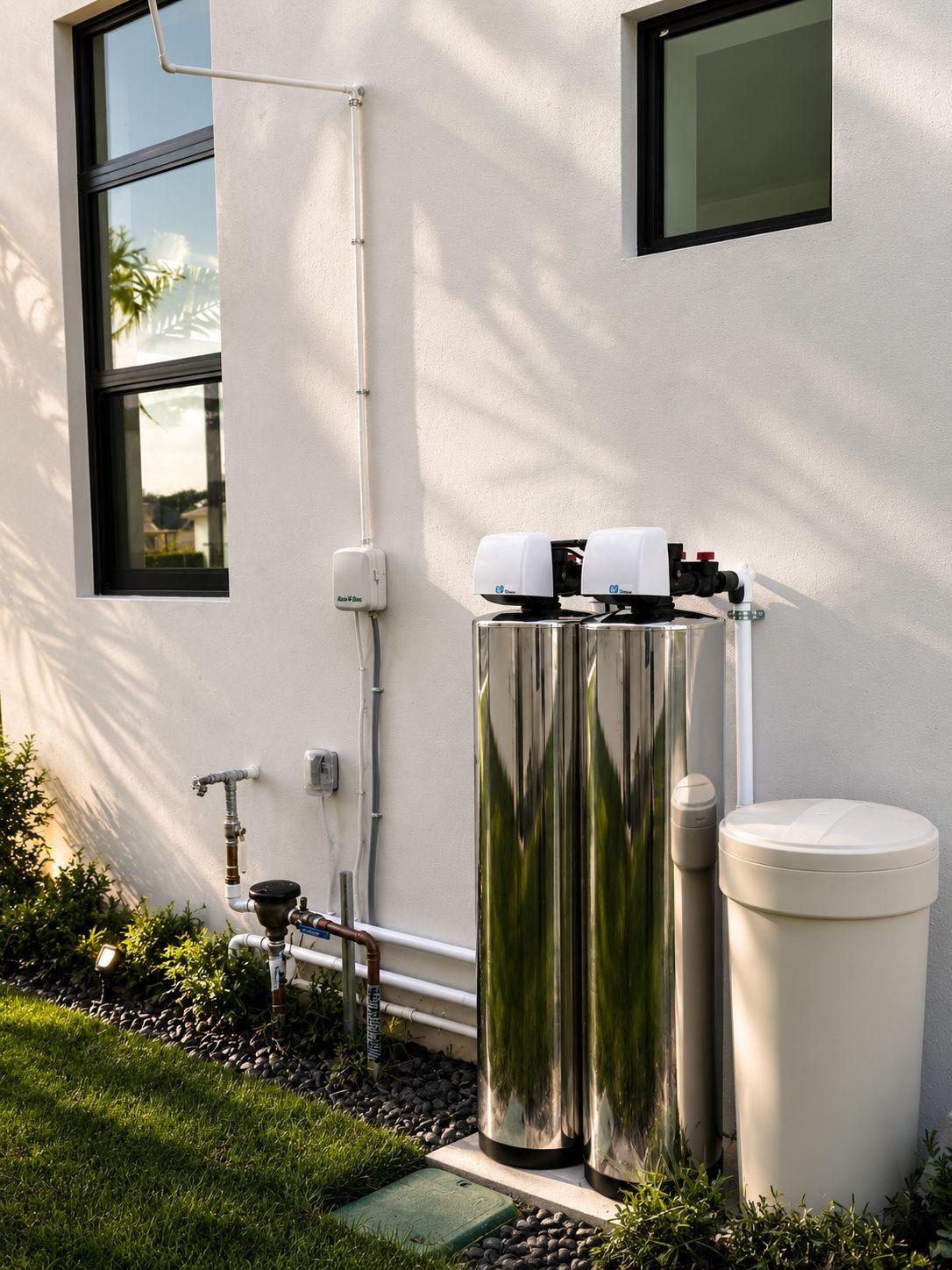
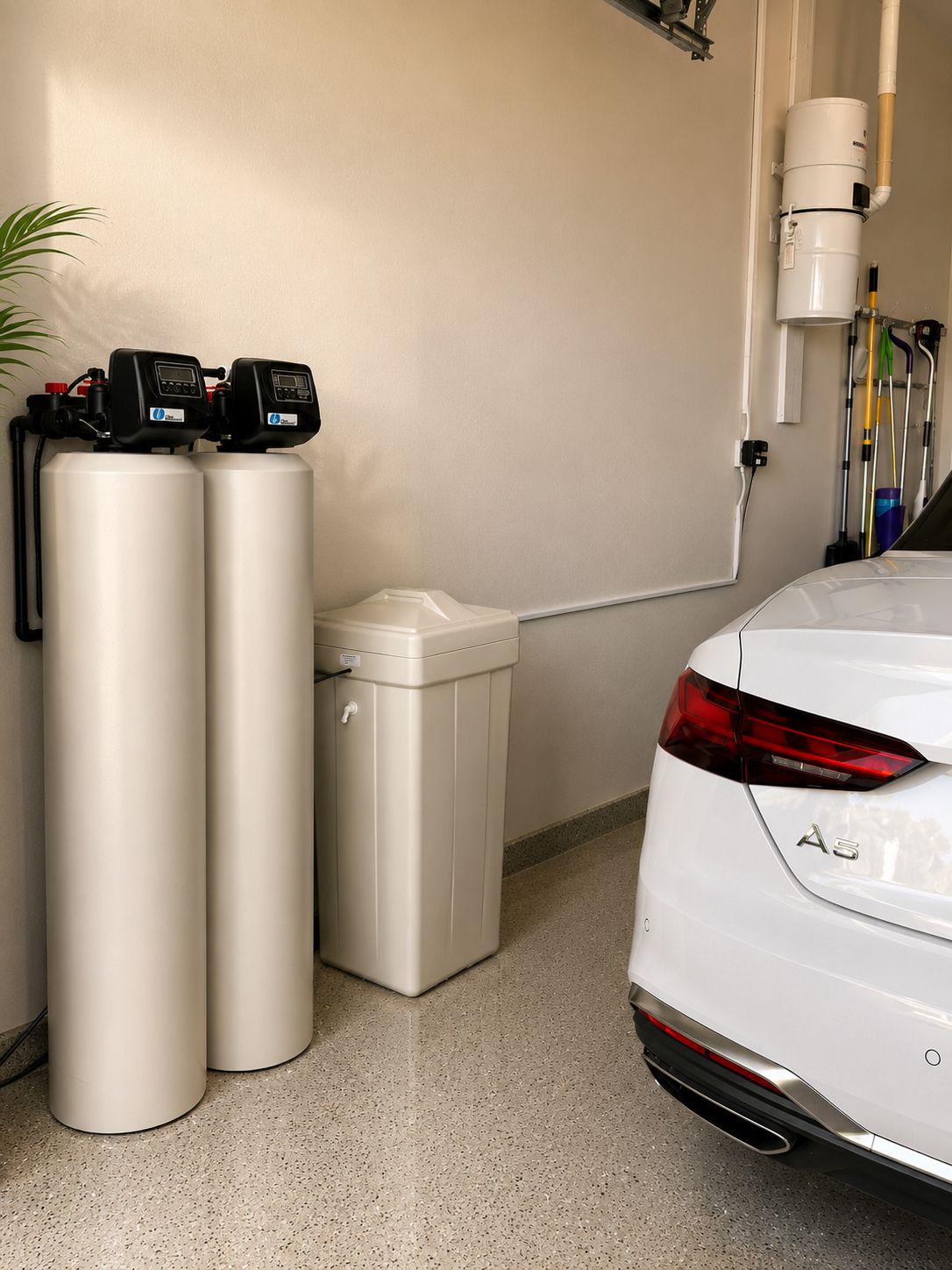
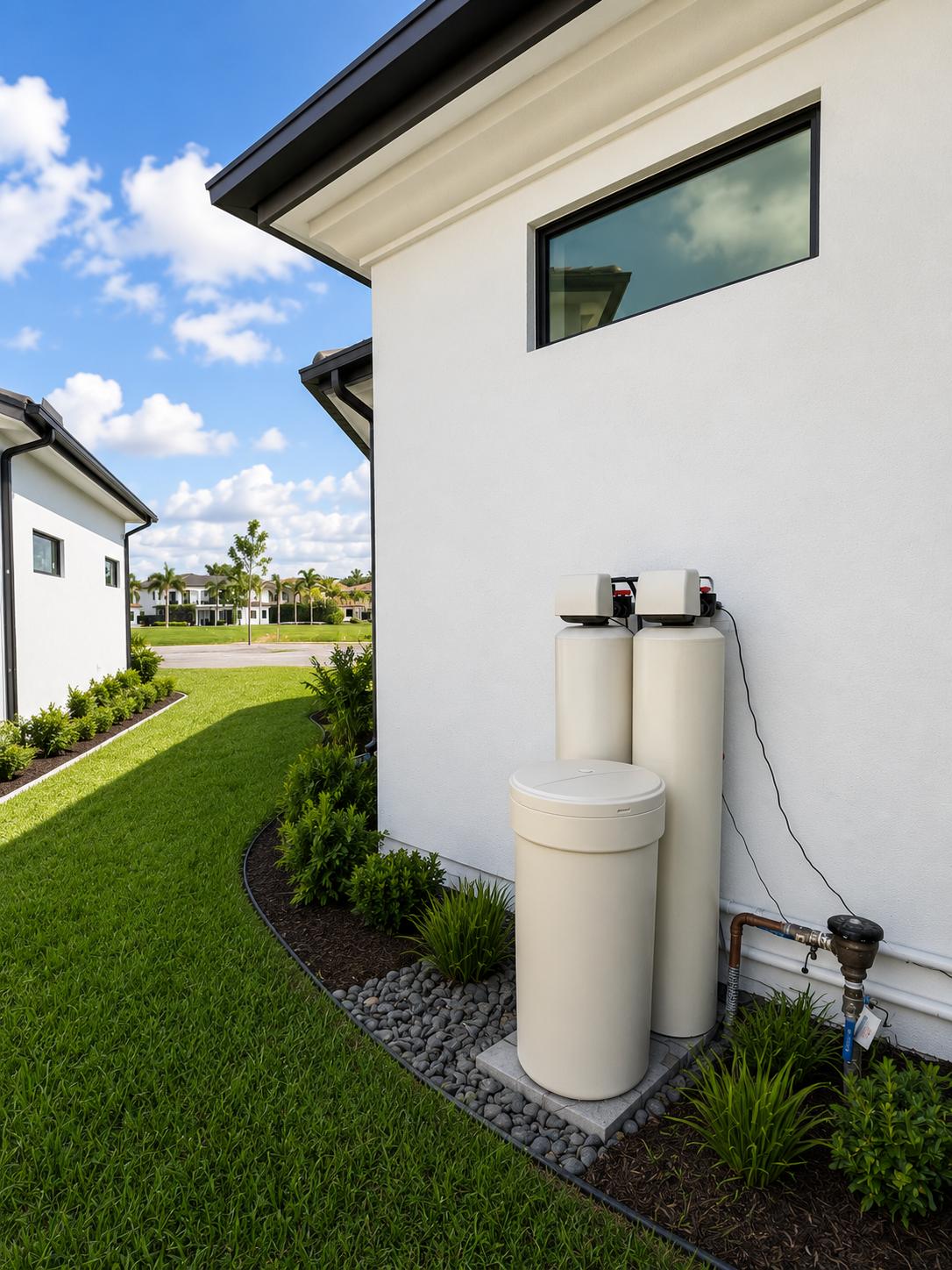
A gallery of the client’s own GHL media so the site feels like Flow Water’s actual work — exposed walls, garages, different finishes, plumbing materials and equipment layouts.
Why Flow Water
The booklets are consistent on one point: the system should be designed around the home, the plumbing, the water and how the household actually uses it.
Water conditions, main-line size, bathrooms, fixtures and where the equipment can physically go.
The right media, tank size, finish, valve and plumbing — without adding equipment the home does not need.
Clean, professional plumbing with proper bypass, full flush and testing before the team leaves.
Quick answers
No. The client booklet explicitly distinguishes the two: salt-free conditioning helps stop scale from forming, but it does not remove hardness minerals the way ion-exchange softening does.
No. The booklet says the media is selected for the water. Options shown include catalytic carbon, coconut shell carbon, bone char, KDF, custom multimedia and ion-exchange resin.
Pre-sediment goes ahead of the main treatment tanks to catch dirt, rust and sand. UV goes after filtration so the water reaches the chamber on its final run into the home.
No. Finish changes how the equipment looks on the wall. Performance is driven by the system architecture, media, tank sizing, valve, plumbing and water conditions.
Bathroom count is only a starting point. Flow Water also considers the main-line size, simultaneous fixture demand, media quantity and what is actually in the water.
Build the right system for your home
No two homes need the exact same setup. Flow Water can confirm the treatment approach, media, tank size, finish and plumbing after seeing the water and the property.
Product Inquiry
Send a quick note about your home, water concerns and available equipment space. The Flow Water team can use that context before your consultation.
Flow Water
Tell us which setup or concern you want to discuss and we’ll follow up.